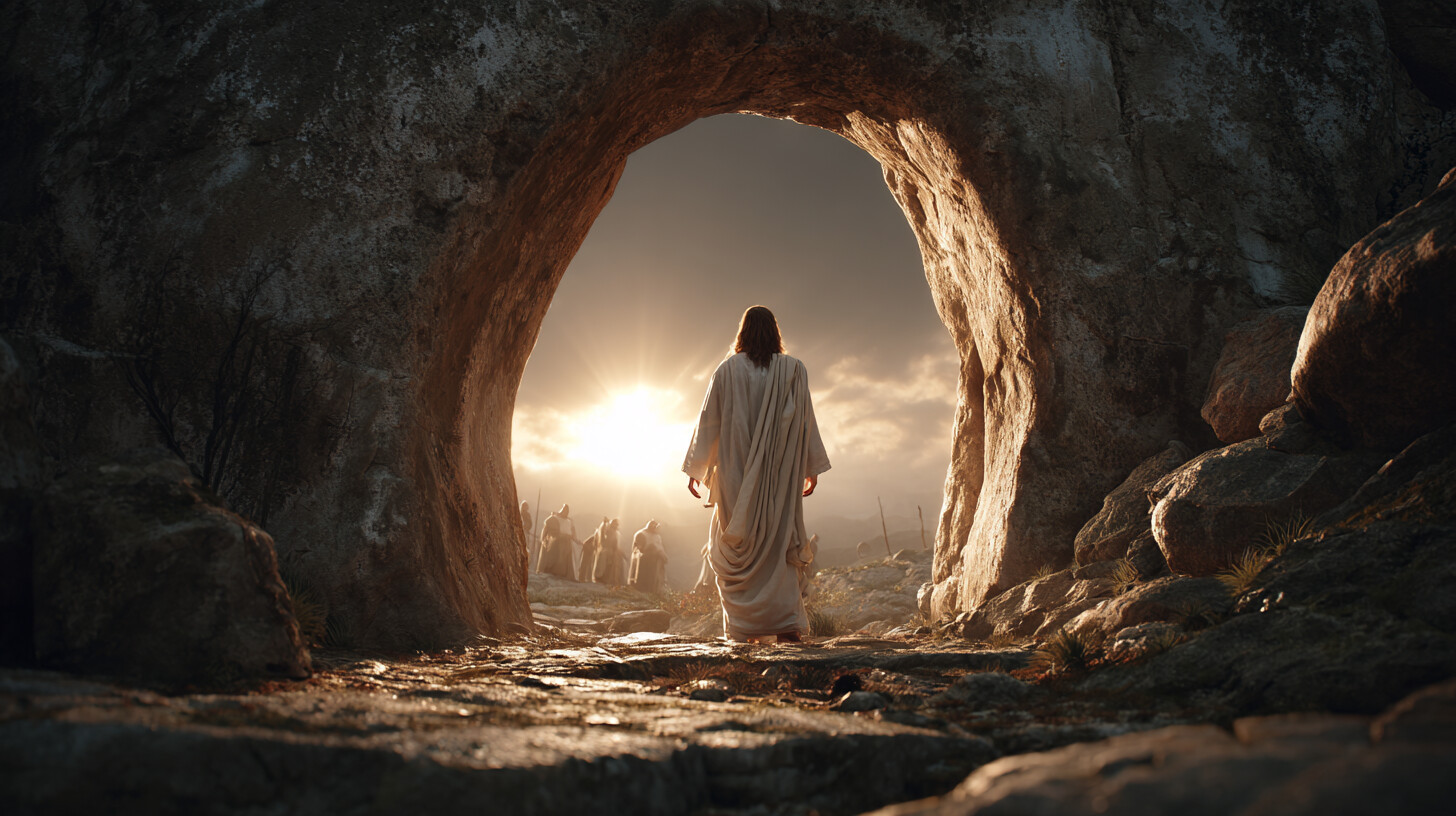
ISAIAH 53: THE VINDICATED VICTOR
Part 3: Resurrection, Exaltation, and Intercession (Isaiah 53:10-12)
[SERIES NAVIGATION] This is Part 3 of a 3-part study on Isaiah 52:13–53:12.
[Link to Part 1] | [Link to Part 2] | [Part 3]
THE JOURNEY TO THIS MOMENT:
Isaiah 53 is a 700-year-old prophecy about Jesus Christ, predicting in stunning detail His rejection, suffering, death, and what comes after.
In Part 1, we saw the framework: the Servant would be exalted (52:13), but first marred beyond recognition (52:14) to accomplish global atonement—He would sprinkle many nations (52:15). Then came the rejection: despite being God’s chosen Servant, He would be despised and rejected by His own people (53:1-3). Humanity esteemed Him as nothing because He didn’t match their expectations of how a Messiah should look.
In Part 2, we reached the heart of atonement: the Servant was pierced for our transgressions, crushed for our iniquities (53:4-6). He didn’t suffer for His own sin—He bore ours. This is substitution: He took what we deserved so we could receive what He deserved. The LORD laid on Him the iniquity of us all. Then we watched Him go silently to slaughter—the willing Lamb (53:7-9), sinless yet condemned, buried with the wicked and the rich. Four gospel writers confirmed what Isaiah prophesied: Joseph of Arimathea placed Jesus’ body in his own tomb, exactly as predicted 700 years earlier.
The sacrifice is complete. The grave is sealed.
But Isaiah doesn’t leave Him there.
Verse 10 begins with one word that changes everything: “Yet.” The crushing was God’s will—and so is what comes next. The resurrection. The satisfaction. The triumph. The intercession that continues right now.
This is where death loses and the Servant is vindicated.
ISAIAH 53:10-12 — THE VINDICATION AND TRIUMPH
The Servant has been crushed. The sacrifice is complete. The grave is sealed.
But Isaiah doesn’t leave Him there. Neither did God.
These final three verses reveal what happens after the death—and it’s staggering. The one who was “cut off out of the land of the living” (v. 8) will see his offspring and prolong his days (v. 10). Death isn’t the end. It’s the doorway to exaltation.
Isaiah 53:10-12: “Yet it was the will of the LORD to crush him; he has put him to grief; when his soul makes an offering for guilt, he shall see his offspring; he shall prolong his days; the will of the LORD shall prosper in his hand. Out of the anguish of his soul he shall see and be satisfied; by his knowledge shall the righteous one, my servant, make many to be accounted righteous, and he shall bear their iniquities. Therefore I will divide him a portion with the many, and he shall divide the spoil with the strong, because he poured out his soul to death and was numbered with the transgressors; yet he bore the sin of many, and makes intercession for the transgressors.”
Verse 10: The Father’s Will and the Servant’s Reward
“Yet it was the will of the LORD to crush him; he has put him to grief; when his soul makes an offering for guilt, he shall see his offspring; he shall prolong his days; the will of the LORD shall prosper in his hand.”
“It was the will of the LORD to crush him”—This is the most theologically loaded statement in the passage.
The crushing wasn’t Satan’s victory. It wasn’t Rome’s cruelty. It wasn’t the mob’s rage. It was God’s deliberate plan. The Father willed the Son’s suffering because that suffering was the only way to satisfy justice and save sinners.
Acts 2:23: “This Jesus, delivered up according to the definite plan and foreknowledge of God, you crucified and killed by the hands of lawless men.”
Human hands drove the nails. But divine sovereignty orchestrated the rescue.
“When his soul makes an offering for guilt”—Hebrew: asham—the guilt offering prescribed in Leviticus 5-6 for specific sins requiring restitution. The Servant’s life (nephesh = soul/life) becomes the guilt offering that satisfies God’s justice.
His death wasn’t just tragic—it was sacrificial. It wasn’t just suffering—it was atonement.
Remember from Part 2: the substitution (53:4-6) showed us why He suffered (our guilt laid on Him). Now verse 10 shows us the Father’s role in orchestrating it. This wasn’t Plan B. This was always the plan.
Then comes the reversal:
“He shall see his offspring”—Wait. The Servant was just killed. Cut off. How does a dead man see offspring?
Because He rises. You can’t see offspring if you stay dead. This is resurrection language embedded in the prophecy. The one who died will live again and see spiritual descendants—all who are saved through His work.
John 12:24: “Truly, truly, I say to you, unless a grain of wheat falls into the earth and dies, it remains alone; but if it dies, it bears much fruit.”
Every believer is His offspring. Bought by His blood. Born again through His death and resurrection. He sees you—the fruit of His suffering.
“He shall prolong his days”—Another resurrection indicator. The one “cut off out of the land of the living” (v. 8) will have His days prolonged. Death doesn’t end Him. He lives forever.
Revelation 1:18: “I died, and behold I am alive forevermore.”
“The will of the LORD shall prosper in his hand”—God’s plan succeeds. The mission is accomplished. The rescue works. Sin is paid for. Death is defeated. The Father’s will—to save a people for His glory—prospers through the Son’s sacrifice.
Verse 11: The Servant’s Satisfaction and Justifying Work
“Out of the anguish of his soul he shall see and be satisfied; by his knowledge shall the righteous one, my servant, make many to be accounted righteous, and he shall bear their iniquities.”
“Out of the anguish of his soul he shall see and be satisfied”—After the crushing, after the agony, He will see the result and be satisfied.
What does He see? Redeemed sinners. Forgiven rebels. Adopted children. A bride purchased by His blood. A people who were dead in sin now alive in Him.
He looks at the fruit of His suffering—you, the offspring He sees in verse 10—and says, “It was worth it.”
Hebrews 12:2: “…who for the joy that was set before him endured the cross, despising the shame, and is seated at the right hand of the throne of God.”
The joy set before Him was redeemed humanity. Rescued. Reconciled. Made righteous.
“By his knowledge shall the righteous one, my servant, make many to be accounted righteous”—This is justification language.
“Accounted righteous” = declared righteous, justified. Not “made morally perfect over time” but legally declared righteous in God’s courtroom.
How? “By his knowledge”—by knowing Him, trusting Him, being united to Him by faith.
Romans 5:19: “For as by the one man’s disobedience the many were made sinners, so by the one man’s obedience the many will be made righteous.”
The Exchange:
He bears your iniquities (takes what you deserve).
You receive His righteousness (get what He deserves).
That’s the gospel in one sentence.
“And he shall bear their iniquities”—Past tense in Hebrew (perfect tense = completed action). The bearing is finished. The guilt is transferred. The debt is paid.
John 19:30: “It is finished.”
The iniquity that the LORD laid on Him in verse 6? The transgressions that pierced Him and the iniquities that crushed Him in verse 5? He has borne them. Completely. Finally. The work is done.
Verse 12: The Victor’s Spoil
“Therefore I will divide him a portion with the many, and he shall divide the spoil with the strong, because he poured out his soul to death and was numbered with the transgressors; yet he bore the sin of many, and makes intercession for the transgressors.”
“Therefore”—Because of everything that just happened (willing sacrifice, guilt offering, resurrection, justification), God rewards the Servant.
Remember the framework from Part 1: Isaiah 52:13 promised the Servant would be “high and lifted up, and shall be exalted.” We’ve seen the marring (52:14). We’ve witnessed the atonement (52:15). We’ve walked through the rejection, substitution, and sacrifice. Now comes the exaltation.
“I will divide him a portion with the many, and he shall divide the spoil with the strong”—This is conquest language. The victor divides the plunder after battle.
Who did He conquer? Sin. Death. Satan. The grave.
Colossians 2:15: “He disarmed the rulers and authorities and put them to open shame, by triumphing over them in him.”
What’s the spoil? Redeemed humanity. Every believer. We are the treasure He fought for and won.
Ephesians 1:18: “…that you may know… what are the riches of his glorious inheritance in the saints.”
His inheritance is redeemed sinners. You’re not just saved—you’re His prize.
“Because he poured out his soul to death”—Total self-giving. Not partial. Not holding back. He gave everything.
The silence we saw in verse 7 (“he opened not his mouth”) was the willing surrender. The lamb led to slaughter went without protest. This wasn’t forced—it was poured out.
“And was numbered with the transgressors”—Crucified between criminals. Identified fully with sinners. We saw this in verse 9: “they made his grave with the wicked.” The sinless one was grouped with the guilty.
“Yet he bore the sin of many”—Not just associated with sin—bore it. Carried it. Absorbed the wrath it deserved.
This is the fifth time Isaiah has stated the substitution in different language:
- Verse 4: “borne our griefs and carried our sorrows”
- Verse 5: “pierced for our transgressions… crushed for our iniquities”
- Verse 6: “the LORD has laid on him the iniquity of us all”
- Verse 11: “he shall bear their iniquities”
- Verse 12: “he bore the sin of many”
Five times. Isaiah will not let you miss this: the Servant took your guilt.
“And makes intercession for the transgressors”—Present tense. Still doing it.
This is the stunning shift. Everything else in the passage has been past tense (what He did) or future from Isaiah’s perspective (what He will do). But this verb is present continuous action.
He’s not just the Savior who died 2,000 years ago. He’s the living High Priest who right now—at this very moment—intercedes for sinners at the Father’s right hand.
Romans 8:34: “…Christ Jesus is the one who died—more than that, who was raised—who is at the right hand of God, who indeed is interceding for us.”
Hebrews 7:25: “Consequently, he is able to save to the uttermost those who draw near to God through him, since he always lives to make intercession for them.”
When you sin and feel condemned, He’s interceding. When you’re weak and afraid, He’s interceding. When the accuser whispers “You’re not really saved,” Christ stands before the Father and says, “I died for them. They’re Mine.”
The work of substitution (bearing sin) is finished (verse 11—past tense). But the work of intercession (pleading on your behalf) is ongoing (verse 12—present tense). He doesn’t just save you and walk away. He saves you and stays with you, advocating for you at God’s right hand forever.
THE FULL ARC OF ISAIAH 52:13–53:12
Let’s see the whole movement—the complete prophecy from beginning to end:
52:13 — The Servant will be exalted (the promise)
52:14-15 — But first, marred and then will sprinkle nations (the method)
53:1-3 — Rejected because He didn’t match expectations (the response)
53:4-6 — Crushed for our sins, not His own (the substitution)
53:7-9 — Silent, willing sacrifice; sinless yet condemned (the offering)
53:10 — God’s will accomplished; the Servant rises and sees offspring (the vindication)
53:11 — He is satisfied; many made righteous (the fruit)
53:12 — Exalted, dividing spoil, interceding forever (the triumph)
Isaiah starts with exaltation, descends into horror, and climbs back to glory—through the grave.
The path to the throne runs through Golgotha. The way to resurrection runs through death. The means of salvation is substitution.
FINAL APPLICATION: WHAT THIS MEANS FOR YOU
Isaiah wrote these words 700 years before Jesus was born. He described the crucifixion before crucifixion was even invented as a method of execution (Rome didn’t adopt it until centuries later). He predicted the Servant would be buried with the rich before Jesus’ birth in poverty. He saw the resurrection (“he shall prolong his days… see his offspring”) before the tomb was ever sealed.
This isn’t human speculation. This is divine revelation—God announcing His rescue plan in advance so that when Jesus came, those with eyes to see would recognize Him. The prophetic accuracy of Isaiah 53 proves two realities:
(1) The Bible is God’s Word, not merely human wisdom.
(2) Jesus is the Christ, the promised Savior, exactly as God said He would be.
Verse 5: He was pierced for your transgressions. Crushed for your iniquities. The chastisement you deserved brought you peace. His wounds healed you.
Verse 6: The LORD laid on Him your iniquity.
Verse 11: By His knowledge, you are accounted righteous.
Verse 12: He bore your sin. He intercedes for you right now.
This isn’t generic. This is personal. The Servant didn’t die for “humanity in general.” He died for you, specifically. Your name was in His mind when He poured out His soul to death.
And now—right now—He sees you (the offspring of His anguish) and is satisfied. You are the fruit that made the cross worth it.
When He looks at you—a forgiven sinner, declared righteous not by your own merit but by His substitution—He doesn’t regret the nails. He doesn’t regret the crushing. He doesn’t regret the grave. He looks at you and says, “Worth it.”
You are the answer to the question in verse 10: “He shall see his offspring.” You.
You are the fulfillment of the promise in verse 11: “Out of the anguish of his soul he shall see and be satisfied.” You.
You are the reason He intercedes in verse 12: “makes intercession for the transgressors.” You.
But here’s the question Isaiah 53 demands you answer:
If the sinless Son of God was crushed under the weight of your guilt—if He bore your iniquities, was pierced for your transgressions, and now intercedes for you at the Father’s right hand—
How then will you live?
Not “how should you live” (as if this is theoretical). How WILL you live—today, tomorrow, when temptation whispers, when fear grips, when the world offers comfort in exchange for compromise?
Will you live like someone who cost God everything—or like someone who thinks grace is cheap?
Will you wander like a sheep to your own way (verse 6), or will you follow the Shepherd who laid down His life for you (John 10:11)?
Will you treat the substitution as information to acknowledge—or as the reality that reorders your entire existence?
The Servant was marred beyond recognition so you could be made beautiful in God’s sight.
The Servant was rejected so you could be accepted.
The Servant was crushed so you could be healed.
The Servant died so you could live.
The Servant rose so you could have hope.
The Servant intercedes so you’re never alone.
This is the gospel Isaiah saw 700 years before the cross. This is the Servant who was promised. This is Jesus Christ, the Lamb of God, the Righteous One, the Vindicated Victor.
And He is satisfied when He sees you—rescued, redeemed, made righteous by His wounds.
[Return to Part 1: The Rejected King]
[Return to Part 2: The Substitutionary Sacrifice]